
Artificial intelligence has become one of the defining forces shaping the future of work. While headlines often frame AI as either a job destroyer or an opportunity engine, the reality is more nuanced.
New research from investing research platform BestBrokers suggests AI is not eliminating side hustle so much as reshaping how value is created, scaled, and monetized. Its analysis of popular side hustles across gig work, freelancing, e-commerce, and content creation reveals a growing divide between labor-based and leverage-based income.
That distinction may increasingly determine who thrives in the AI era.
The limits of time-for-money work
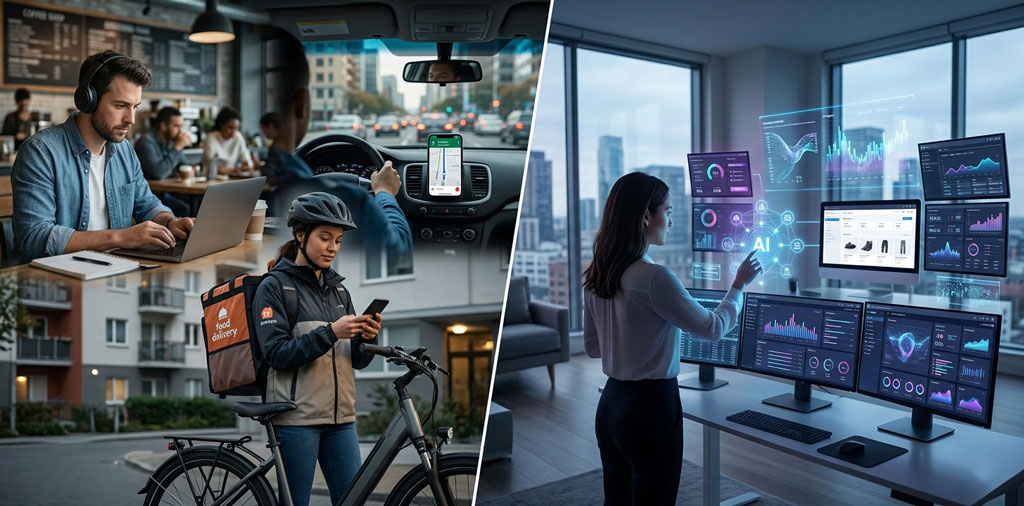
Platforms such as Uber, Lyft, DoorDash, Instacart, and Amazon Flex remain popular because they offer flexible income and low barriers to entry. Yet they share a structural constraint: earnings remain tied to hours worked.
AI can improve routing, dispatching, and matching efficiency, but individual workers capture only a fraction of those gains. A driver can complete only so many trips in a day; a courier can make only so many deliveries within a fixed number of hours.
This highlights an important reality about AI’s economic impact. In physical, location-dependent work, human time remains the bottleneck. Technology may improve the system, but it does not fundamentally change the worker’s earning equation.
Freelancing’s AI challenge
Freelancing sits in a more complicated position. Writers, designers, tutors, and consultants can use AI to complete tasks faster and increase...


Subscribe to Continue Reading
Get exclusive AI insights for marketers and business leaders - newsletters, strategies, and expert tips included.