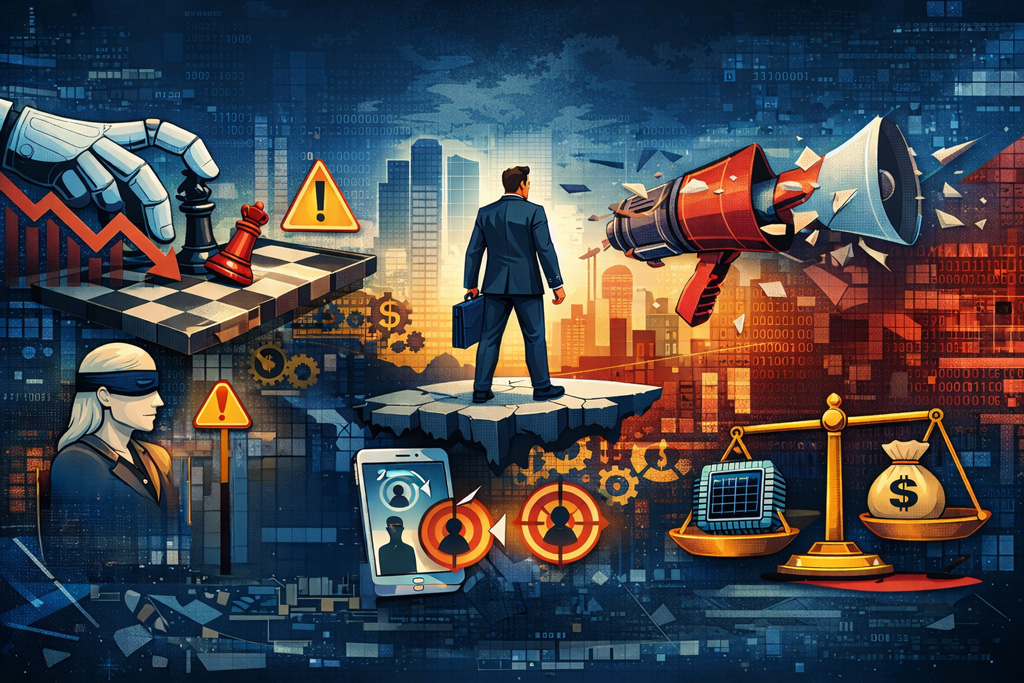

As AI becomes more deeply woven into marketing, one reality is impossible to ignore: ethical failure is no longer abstract. It shows up in day-to-day operations, in real metrics, and more often than not, on the balance sheet.
What AI ethics research makes painfully clear is that the most damaging outcomes rarely stem from malicious intent. They emerge from quieter forces: unquestioned assumptions, blind faith in automation, and the slow normalization of harm because “the system is working.”
For marketing leaders, this shifts ethics out of the realm of values statements and into the domain of risk management, brand resilience, and long-term market viability.
Marketing is uniquely exposed. Unlike back-office optimization or logistics automation, marketing AI doesn’t just improve efficiency; it shapes perception, behavior, and access. When these systems fail ethically, the fallout is rarely immediate. Instead, it accumulates. It embeds. And by the time the damage is visible, reversing it is no longer a technical problem but a structural one.
Data isn’t neutral and markets were never fair
One of the most persistent myths in AI-driven marketing is the idea that data delivers objectivity. Ethical scholarship dismantles this illusion quickly. Data is a mirror of society, and society is not neutral.
Historical data encodes who had purchasing power, who had access, who was visible, and who was ignored. When marketing models...


Subscribe to Continue Reading
Get exclusive AI insights for marketers and business leaders - newsletters, strategies, and expert tips included.