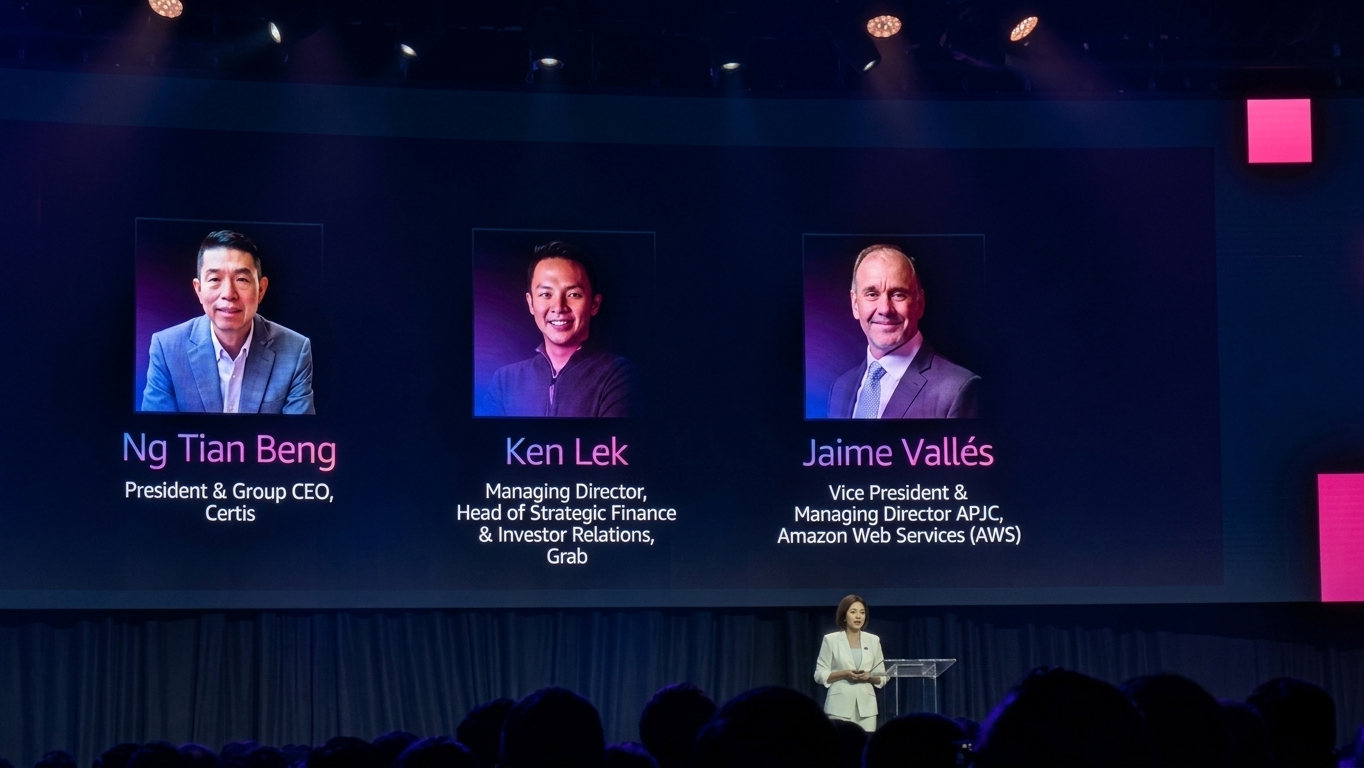

The Amazon Web Services Summit Singapore 2026 opened today with a clear message: artificial intelligence is no longer being positioned as a standalone productivity tool, but as a foundational operational layer that will reshape industries, enterprise systems, workforce structures, and national competitiveness across Asia.
Bringing together government leaders, enterprise executives, developers, and technology partners, the summit reflected Singapore’s broader ambition to establish itself as one of Asia’s leading AI and cloud innovation ecosystems.
AWS reinforces Singapore’s strategic importance
Opening the summit, AWS Singapore Managing Director Priscilla Chong highlighted AWS’s 20th anniversary and underscored Singapore’s long-standing role in AWS’ Asia-Pacific expansion strategy. She noted that Singapore hosted AWS’s first Asia-Pacific region in 2010 and revealed that AWS has already invested S$11.5 billion into Singapore’s digital infrastructure, with plans to invest an additional S$12 billion through 2028.
Priscilla framed the summit around four major pillars (vision, execution, security, and empowerment), positioning AWS closely alongside Singapore’s national AI ambitions. She explained that AWS is actively supporting Singapore’s AI ecosystem through partnerships spanning healthcare, retail, finance, startups, and enterprise modernization.
Among the summit’s major announcements was AWS’s expanded commitment to AI workforce development. Eligible learners across Singapore’s Institutes of Higher Learning will receive complimentary Kiro Pro credits, while AWS has also introduced the AWS Awesome Lab initiative, designed to connect student-built AI solutions with businesses across Singapore.
Singapore frames AI as economic infrastructure
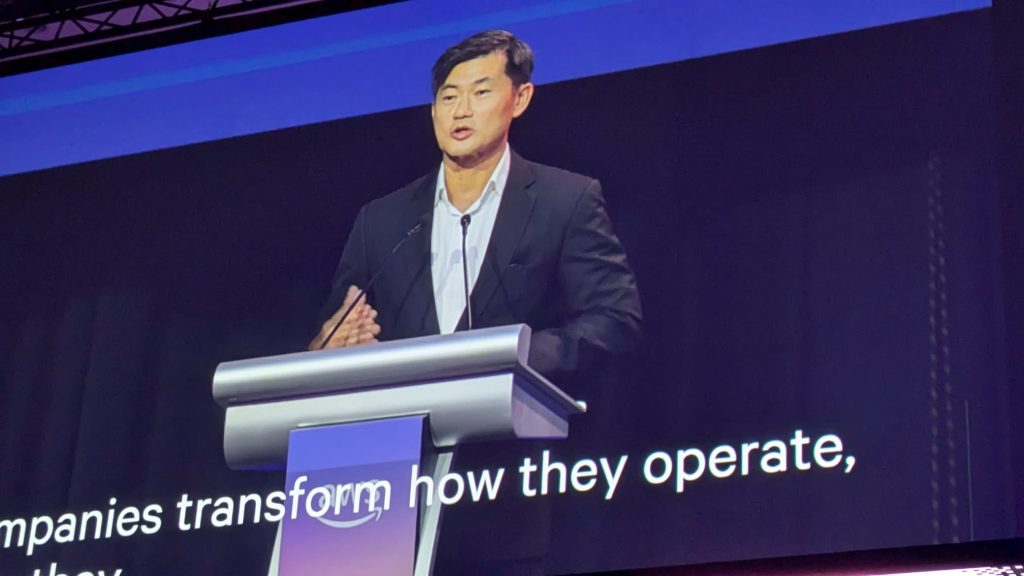
Desmond Tan, Singapore’s Senior Minister of State, shifted the discussion beyond technology itself toward workforce resilience, governance, and long-term economic inclusion. He emphasized that Singapore’s ability to navigate technological disruption has historically depended not only on innovation but on balancing execution, fairness, and societal adaptation.
Referencing Singapore’s digital transformation journey from the computerization era of the 1980s to today’s AI-driven economy, Desmond Tan highlighted the country’s National AI Strategy, AI governance frameworks, and the recently established National AI Council, chaired by the Prime Minister. He stressed that AI must ultimately serve the public good and that economic transformation cannot leave workers behind.
He also outlined workforce initiatives such as NTUC’s Company Training Committees (CTCs) and AI Ready SG, both aimed at helping businesses adopt AI while simultaneously reskilling workers and redesigning jobs. AWS and NTUC recently partnered to support AI transformation across at least 100 companies while expanding AI training opportunities for 10,000 workers.
AWS pushes beyond chatbots toward AI agents

The summit’s strongest technology narrative emerged during the keynote by Jaime Valles, AWS Vice President and Managing Director for Asia Pacific, Japan, and China. Jaime described AI agents as the next major evolution of enterprise computing — systems capable not only of generating responses, but of autonomous reasoning, orchestration, and operational execution.
Central to that strategy was the introduction of Kiro, AWS’s AI-powered software development environment. Kiro is designed to assist developers with specifications, architecture diagrams, testing workflows, documentation, and code generation, reflecting growing enterprise demand for more structured and transparent AI-assisted software engineering environments.
AWS also showcased Amazon Q and AWS Transform as part of its enterprise modernization strategy. AWS Transform was positioned as a large-scale migration and modernization platform capable of accelerating transitions away from legacy technologies, including VMware, Mainframe, and Windows environments. According to AWS, the platform has already saved more than 1.35 billion hours of manual migration work globally.
Healthcare, robotics, and enterprise AI move into the mainstream

Healthcare emerged as another major focus area throughout the summit. AWS demonstrated how organizations such as Singapore General Hospital are leveraging cloud infrastructure and generative AI systems to improve chronic disease management, patient communication, and healthcare coordination.
Meanwhile, Certis presented one of the summit’s most visible demonstrations of operational AI deployment. Certis President and Group CEO Ng Tian Beng showcased how robotics, AI agents, and cloud infrastructure are being integrated into frontline security environments using humanoid concierge robots and autonomous patrol systems connected through AWS-powered orchestration platforms.
Ng Tian Beng explained that Certis is redesigning operations around AI and automation rather than simply layering technology onto existing systems. The company’s platform combines computer vision, large language models, reinforcement learning, and robotics into a unified operational environment designed to improve both efficiency and trust in frontline services.
Grab also highlighted how AI and cloud modernization are transforming enterprise finance and operational intelligence. Ken Lek, Managing Director and Head of Strategic Finance and Investor Relations at Grab, explained how the company rebuilt its enterprise data foundation on AWS after operational challenges during the COVID-19 pandemic.
Grab’s internal “Grabhouse” platform now functions as a unified enterprise data environment supporting analytics, AI-powered forecasting, and strategic finance operations. According to Grab, the modernization reduced manual reconciliation processes by 60 percent while enabling real-time reporting and more accurate financial modeling.
Security, sovereignty, and trust become central AI themes
Beyond innovation, AWS repeatedly emphasized themes surrounding security, sovereignty, governance, and trust. Executives highlighted AWS’ secure cloud architecture, compliance frameworks, AI governance tools, and enterprise safeguards designed to support organizations adopting AI at scale.
The summit ultimately reflected a broader shift occurring across the global technology industry. AI is increasingly being positioned not merely as software assistance, but as intelligent infrastructure capable of reshaping software development, enterprise operations, healthcare delivery, workforce systems, and public services.
For Singapore, AWS Summit Singapore 2026 reinforced a larger strategic ambition: becoming a regional hub where government, enterprises, developers, workers, and technology providers collectively shape the next generation of AI-driven economic infrastructure.
Closing the summit, Jaime Valles summarized AWS’ broader vision for the future of AI innovation, stating that AWS aims to “you don’t have to accept the limitations of today. As the boundaries of tomorrow.” His remarks reflected the summit’s central message: the next era of AI will not be defined solely by technological capability, but by how effectively nations and organizations build systems that are scalable, trustworthy, and operationally transformative.
By Logesan Uthaya Sandiran, MediaBUZZ – AI in Marketing