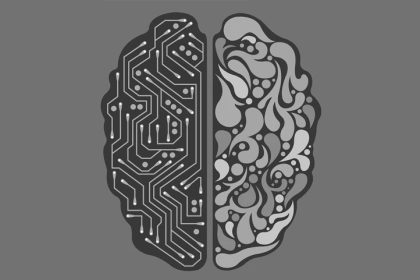

To track AI’s advancement toward human-like intelligence, OpenAI has introduced a five-stage scale. This framework outlines AI’s journey from simple language models to sophisticated systems that could one day surpass human cognitive abilities in economically valuable tasks. By following this structured methodology, researchers and developers can measure AI’s evolution—from basic chatbots to systems capable of managing entire organizations. Currently, OpenAI is nearing the end of the second stage, the “Reasoner” phase, marking a critical milestone in AI development. This progress brings AI one step closer to achieving Artificial General Intelligence (AGI), a concept that continues to spark debate among researchers, ethicists, and futurists.
The five stages of AI progress
Each stage in OpenAI’s scale represents a significant leap in intelligence, capability, and autonomy:
- Stage 1: Chatbots – At the most basic level, AI systems can process natural language and generate human-like text. Early versions of GPT models exemplify this stage by engaging in conversations, answering questions, and stimulating dialogue. However, they lack true reasoning abilities, as their role is limited to contextual language processing without deeper logical insights.
- Stage 2: Reasoners – The next stage, which AI is now approaching, marks a significant breakthrough. AI systems classified as “Reasoners” exhibit problem-solving abilities comparable to those of a Ph.D. graduate. Unlike simple chatbots, these models not only process data but also apply logic, abstract reasoning, and independent problem-solving skills. OpenAI’s latest GPT-4 iteration, possibly powered by Q*-algorithms, is pushing the boundaries of this stage by demonstrating reasoning capabilities that bridge the gap between language processing and intellectual rigor.
- Stage 3: Agents– As AI progresses, it transforms into an “Agent.” These AI models move beyond reasoning to actively interact with their environment. They don’t just solve problems; they take initiative and adapt their actions based on new information. Autonomous task completion,...


Subscribe to Continue Reading
Get exclusive AI insights for marketers and business leaders - newsletters, strategies, and expert tips included.