

Why “knowing when to stop” may reshape marketing intelligence
Marketing has always rewarded confidence. Bold claims, decisive messaging, and fast execution are the instincts that drive campaigns forward. Generative AI fits neatly into that culture, producing copy, insights, and recommendations at scale with remarkable fluency. But fluency is not the same as truth, and that distinction is becoming harder to ignore.
Mitani Sangyo’s proposed “AI Reliability Governance Framework” introduces a disruptive premise: AI systems should be designed not just to answer, but to withhold answers when uncertainty is high.
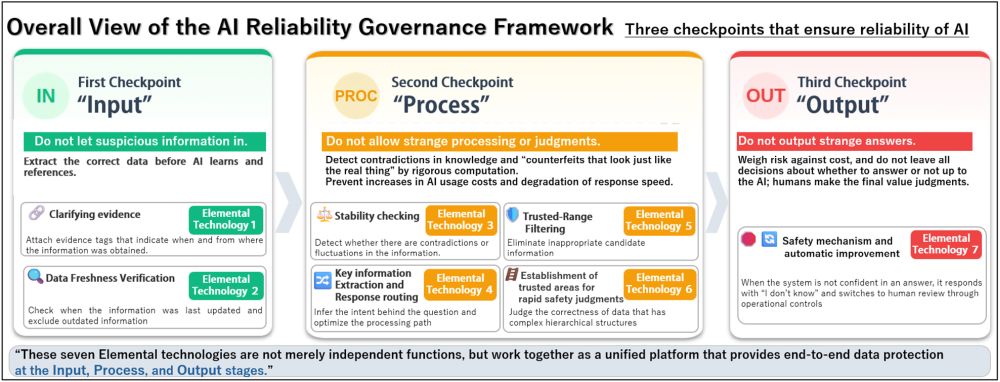
Mitani Sangyo’s AI Reliability Governance Framework illustrates Input–Process–Output checkpoints designed to evaluate data quality, model confidence, and response reliability. Source: Mitani Sangyo via ACN Newswire.
It sounds almost counterintuitive in a marketing context, where responsiveness is treated as a virtue. Yet this idea exposes a structural flaw in how AI is currently used across the industry.
Today’s marketing AI does not signal doubt. It generates outputs with the same tone regardless of whether the underlying data is strong, weak, or outright flawed. The result is a growing layer of invisible risk—decisions being made on top of outputs that were never grounded in verifiable evidence. For example, a pricing model trained on outdated demand signals may confidently recommend discounts that erode margin, while a customer service chatbot may improvise policies that do not actually exist. In both cases, the issue is not capability, but unchecked confidence.
From persuasion machines to...


Subscribe to Continue Reading
Get exclusive AI insights for marketers and business leaders - newsletters, strategies, and expert tips included.