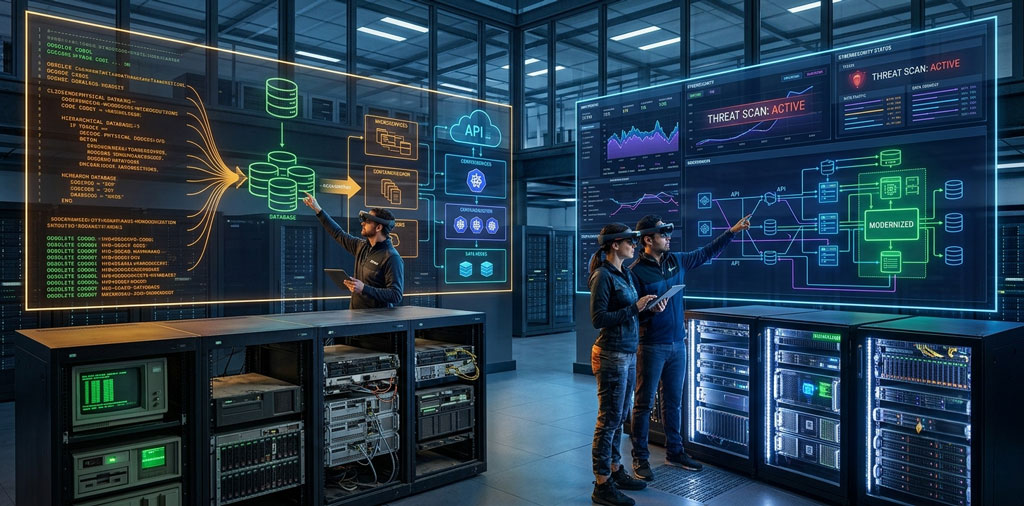

The next AI revolution may have nothing to do with chatbots. Instead, it may be hidden inside millions of lines of aging code running the world’s most important organizations.
Hitachi’s expanded partnership with OpenAI signals a growing shift in enterprise AI—from generating content to modernizing legacy systems and strengthening cybersecurity at a scale few companies have previously been able to achieve.
The legacy system challenge
Across industries, organizations continue to rely on decades-old systems that remain critical to daily operations. Banks, insurance companies, utilities, transportation networks, government agencies, and manufacturers often operate technology environments built over many years, sometimes by engineers who have long since retired.
These systems frequently contain millions of lines of code, limited documentation, and deep operational complexity. While executives understand the need for modernization, many projects stall because nobody fully understands how these systems work anymore.
This challenge has become one of the largest barriers to digital transformation worldwide.
Hitachi estimates that it currently supports approximately 15,000 mission-critical systems in Japan alone. Similar situations exist across Europe, North America, and the Asia-Pacific.
The question facing many organizations is no longer whether they should modernize. It is how they can do so safely without disrupting essential business operations.
AI becomes an engineering partner
This is where the Hitachi-OpenAI collaboration becomes strategically significant.
Rather than using AI primarily as a content creation tool, the partnership leverages OpenAI’s Codex...


Subscribe to Continue Reading
Get exclusive AI insights for marketers and business leaders - newsletters, strategies, and expert tips included.