
For years, marketing has been framed as a craft: part creativity, part analysis, guided by human judgment. Campaigns were planned, launched, measured, and refined. There was a rhythm to it. A sense of control.
That rhythm is breaking.
AI agents are often introduced as tools for efficiency: faster optimization, better targeting, smarter automation. But that framing understates what is actually happening. This isn’t a story about marginal gains in execution. It’s about decision-making moving elsewhere.
Across the industry, a quiet convergence has taken place. Companies like OpenAI, Google DeepMind, Microsoft, Anthropic, Meta, Amazon, and IBM are all building toward the same idea: systems that can interpret goals, decide what to do, and act across tools with minimal human involvement.
Marketing isn’t just being optimized; it’s being reorganized around agents.
From campaigns to systems
Marketing used to move in cycles: plan, execute, analyze, refine. Today, those boundaries are dissolving.
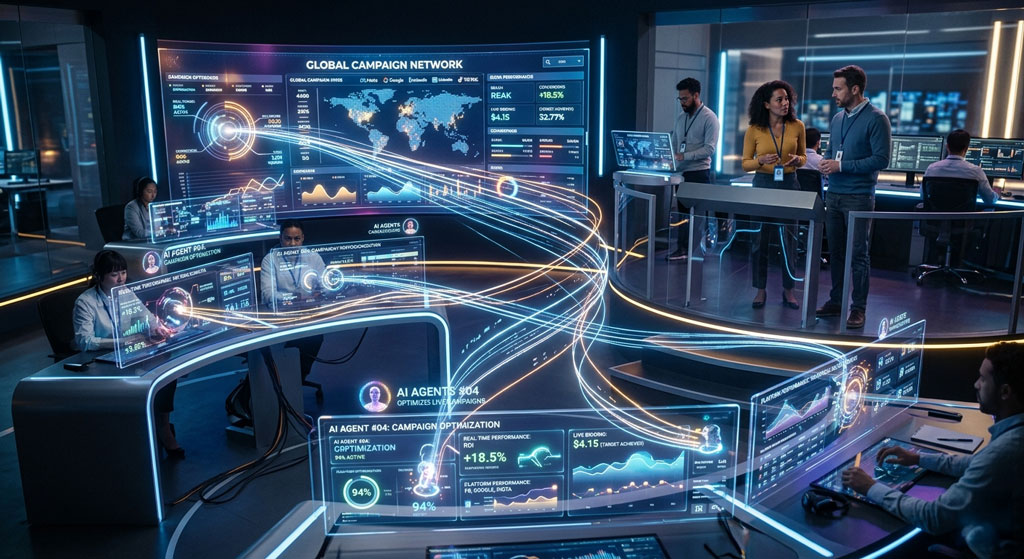
Agentic systems don’t wait for a campaign review. They constantly adjust budgets, creative, targeting, and channels, shifting in real time based on signals most humans never see.
Tools like Performance Max or Advantage+ hint at this shift. Marketers still provide input; the system determines outcomes. It’s often described as automation, but it feels different in practice.
It feels like delegation.
The marketer is no longer steering every decision. They are supervising something that is.
By 2025, this shift stopped feeling experimental. Agentic systems were no...

Subscribe to Continue Reading
Get exclusive AI insights for marketers and business leaders - newsletters, strategies, and expert tips included.