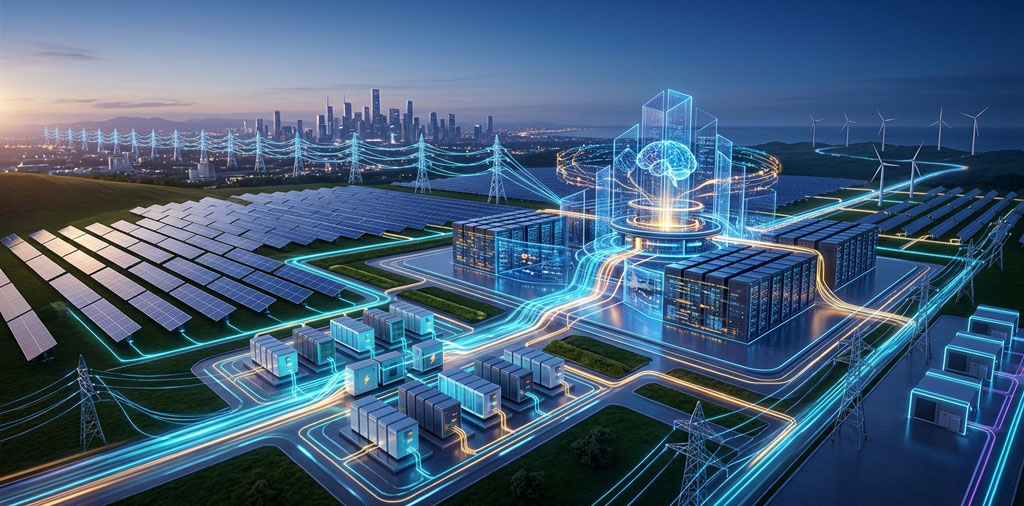

For the past few years, the story of artificial intelligence has been told almost entirely through software. It has been a story of models getting smarter, systems getting faster, and companies racing to automate everything from writing to decision-making. The spotlight has stayed firmly on what AI can do. But something quieter, and arguably more important, is beginning to reshape that narrative. AI is no longer just about intelligence but about infrastructure.
That shift became harder to ignore this week, when Sigenergy Technology Co., Ltd. announced its IPO on the Hong Kong Exchange, with backing from names like Temasek Holdings and Goldman Sachs Asset Management.
On the surface, it looks like another high-growth company is going public. But underneath, it signals something deeper: a redefinition of where AI value is being built.
The part of AI we don’t see
Most conversations about AI happen in the visible layer: the interfaces, the outputs, the applications. What we don’t see is what makes all of it possible. Every AI-generated response, every recommendation, every model training cycle runs on physical system servers, cooling, and most critically, energy. Massive amounts of it.
As AI adoption accelerates, this invisible layer is becoming impossible to ignore. The question is no longer just: How smart can AI become? It is increasing: How much can we actually power?
From utility to intelligence
Energy, for a long time, has been treated as a...


Subscribe to Continue Reading
Get exclusive AI insights for marketers and business leaders - newsletters, strategies, and expert tips included.